 Việt Long Trà
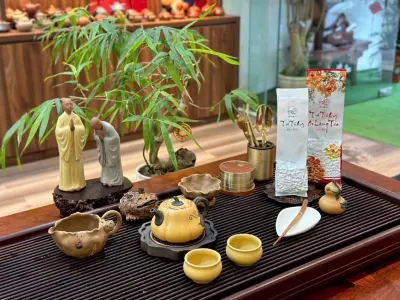
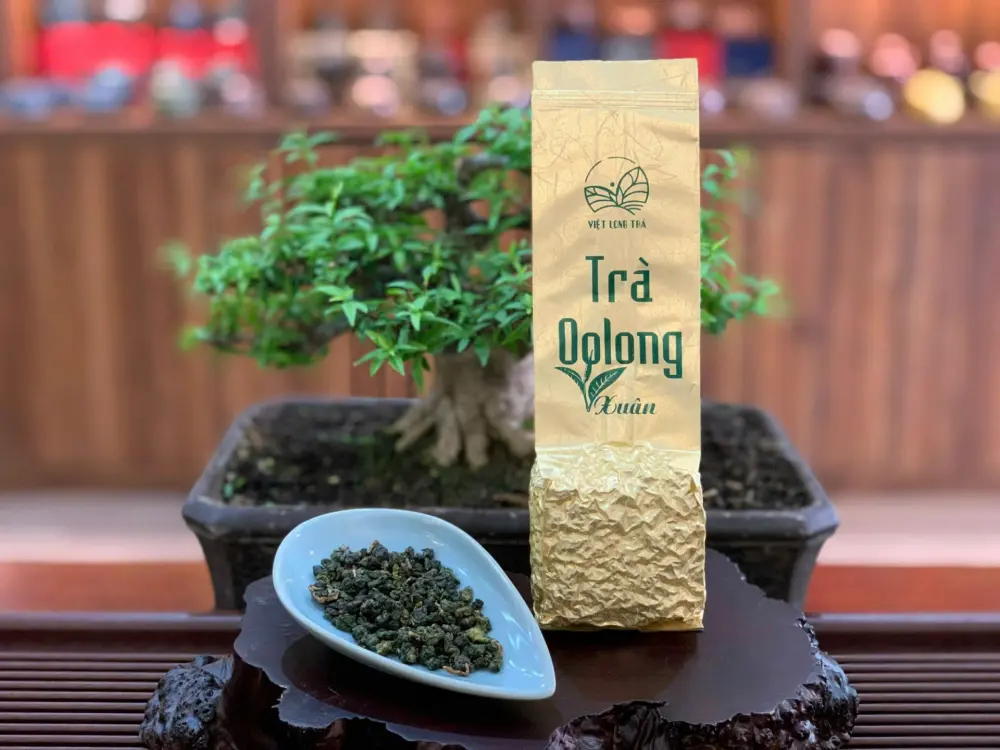
The oolongs on the shelf
· 6 min read · Việt Long Trà
The name on the packet tells a buyer less than they think. One name is a cultivar, another is a mountain, a third is a way of making the tea — and none of the three stands in for the others.
Below are the oolongs most often found on a shelf in Vietnam, set out by where they sit on the oxidation range rather than alphabetically.
High-mountain oolong
This is a name for an altitude, not for a cultivar. Grown in the mountains, most often in Taiwan: Alishan, Dayuling. The higher it grows, the wider the swing between day and night temperature: the bush grows slowly and the leaf comes out thicker and sweeter. This is the lightly oxidised, lightly roasted group — a clear liquor, floral aroma and a touch of cream.
If oolong is new to you, this is the safest place to start: easy to brew, hard to ruin, and almost everyone finds it pleasant. In exchange, the higher the garden the dearer the tea, and the highest of them sit at the top of the shelf.
Jin Xuan
Jin Xuan is the name of a cultivar, not a region: a Taiwanese bred hybrid, known as number 12. You know it at once by its natural milky aroma — not a flavouring, but the cultivar's own scent when it is made at light oxidation. The taste is soft and sweet, with very little astringency.
It is the best seller among the light oolongs, and the one most often chosen by people who are used to coffee with milk rather than to plain leaf. One caveat: there is also a Jin Xuan with milk flavouring added, and that is a different tea. The natural aroma is fainter and fades after a few infusions; the added one is thick and stays.
Tie Guan Yin
One of China's Ten Great Famous Teas, from Fujian. Its classic marker is an orchid aroma: high, clean, and it lingers a long time in the empty cup once the tea is drunk. Smelling the empty cup is how people test a Tie Guan Yin.
Tie Guan Yin is made in two quite different styles: a light style, lightly oxidised and lightly roasted, green and floral; and a traditional one, oxidised further and roasted harder, with a dark liquor and a baked note. One name, and anyone used to the one style usually does not recognise the other.
Si Ji Chun
The name means "four seasons": this cultivar is picked all year round, which is why it costs less than high-mountain tea. The aroma is bolder and more direct, less refined, but it stands up to many infusions and makes good everyday drinking. It is worth buying by the kilo if you drink tea every morning.
Aged oolong
Oolong kept for years and re-roasted at intervals — every few years, to keep damp out of it and to let the taste carry on developing. The floral aroma is gone; in its place are Chinese herbs, wood and honey. The liquor is dark amber and the taste deep and warming.
This is the one people reach for on a cold evening rather than in the heat. It also takes water at a full boil and a long steep, which makes it easier to brew than a light oolong.
The far end of the range
Oolong red tea — red-leaf tea — and Oriental Beauty sit right at the end. Oriental Beauty has one oddity: the leaf has to be bitten by a small green leafhopper before the bush produces the compounds behind its honey aroma, which means the garden cannot treat against that leafhopper for that crop. The yield is small and unpredictable, and that is where the price comes from.
This group gives an orange-red liquor, honey-sweet and almost without astringency. Anyone used to red tea finds it the easiest way in, and it is also the group that takes milk best, if that is how you like it.
Scenting, coating and everything else
- Scented oolong. Milk, jasmine — here the aroma is added rather than the cultivar's own. Nothing wrong with that, but it is worth knowing what you are buying.
- Ginseng oolong. The pellets are coated in ginseng and liquorice powder, which is why they are large and grey. The sweet finish is very long, very distinctive, and nothing like plain oolong.
- GABA. Made like an ordinary oolong, but with an added anaerobic resting step that raises its GABA content. The taste is slightly tart and fruity, and markedly unlike the rest of the family.
- Black oolong. Roasted until it tastes of smoke. This is the far edge of the roasting axis, worth trying once the middle is familiar.
- Broken leaf. Gives its liquor very fast and very strong. Not a defect but a material for drinks — milk tea, iced tea — rather than for a small teapot.
In the shop
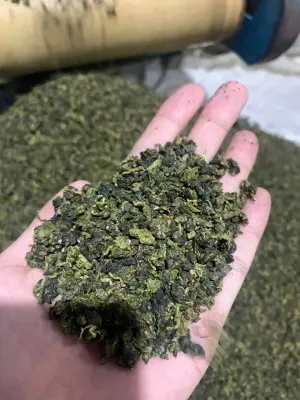
If it is not yet clear what the degree of oxidation and the roast actually decide, read the article on what oolong is first — choosing by the scale is far easier than choosing by the name.