 Việt Long Trà
What oolong is: oxidation, roast and how to choose
· 5 min read · Việt Long Trà
Oolong is not one kind of tea. It is a whole range, from tea that is almost green to tea that is almost red — and the two ends of that range taste so different that newcomers rarely believe they share a name.
The same bush, the same garden, even the same leaf picked over one morning: what decides which tea it becomes is what happens in the two days after the picking.
How leaf becomes oolong
Oolong takes more steps than any other kind of tea, and every step can be stopped early or late:
- Withering. The leaf is spread out to lose some of its water, first in the sun and then indoors. Until it goes soft it cannot be rolled without tearing.
- Rolling and tumbling. The leaf is tumbled in rotating drums to bruise its edges. This is the decisive step: the bruised parts meet the air and begin to oxidise, while the middle of the leaf does not.
- Oxidation. The leaf rests, and its smell changes by the hour — from grass to flowers, then to ripe fruit. The maker goes by nose to know when to stop.
- Fixing. Heat kills the enzymes and everything halts at exactly that point. This is where the degree of oxidation is locked in.
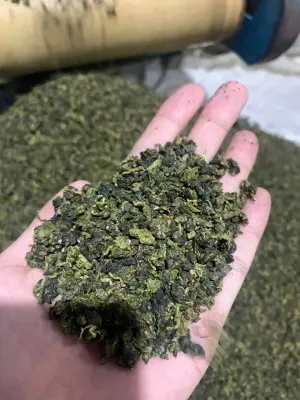
- Shaping. It depends on the tea: Taiwanese and Anxi oolongs are wrapped in cloth and pressed and rolled dozens of times until the leaf forms a tight pellet, while Wuyi rock teas and Dancong are left as a twisted strip.
- Roasting. Drying, and for many teas repeated roasts over the following months.
Oolong is locked in somewhere between 8% and 85% oxidation, and it is that wide window that produces everything on the shelf.
How to read a packet of oolong
- Light oxidation (8–30%). A yellow-green liquor, floral aroma, clean taste. The leaf is usually rolled into tight pellets.
- Medium oxidation (30–50%). Deep yellow through to amber, a riper aroma, a thicker finish.
- Heavy oxidation (50–85%). An orange-red liquor, honey and dried fruit, close to red tea.
The second axis: roast
The degree of roast is independent of the degree of oxidation, and newcomers usually take the two for one thing. At the same oxidation, a lightly roasted tea comes out fresh and floral, a heavily roasted one deep, with a baked note and a sweet finish.
Two practical consequences follow. A heavily roasted tea keeps far longer — that is what makes aged oolong possible at all. And a lightly roasted one is easier to ruin with water that is too hot, because its thin layer of aroma sits right at the surface of the leaf.
The raw material
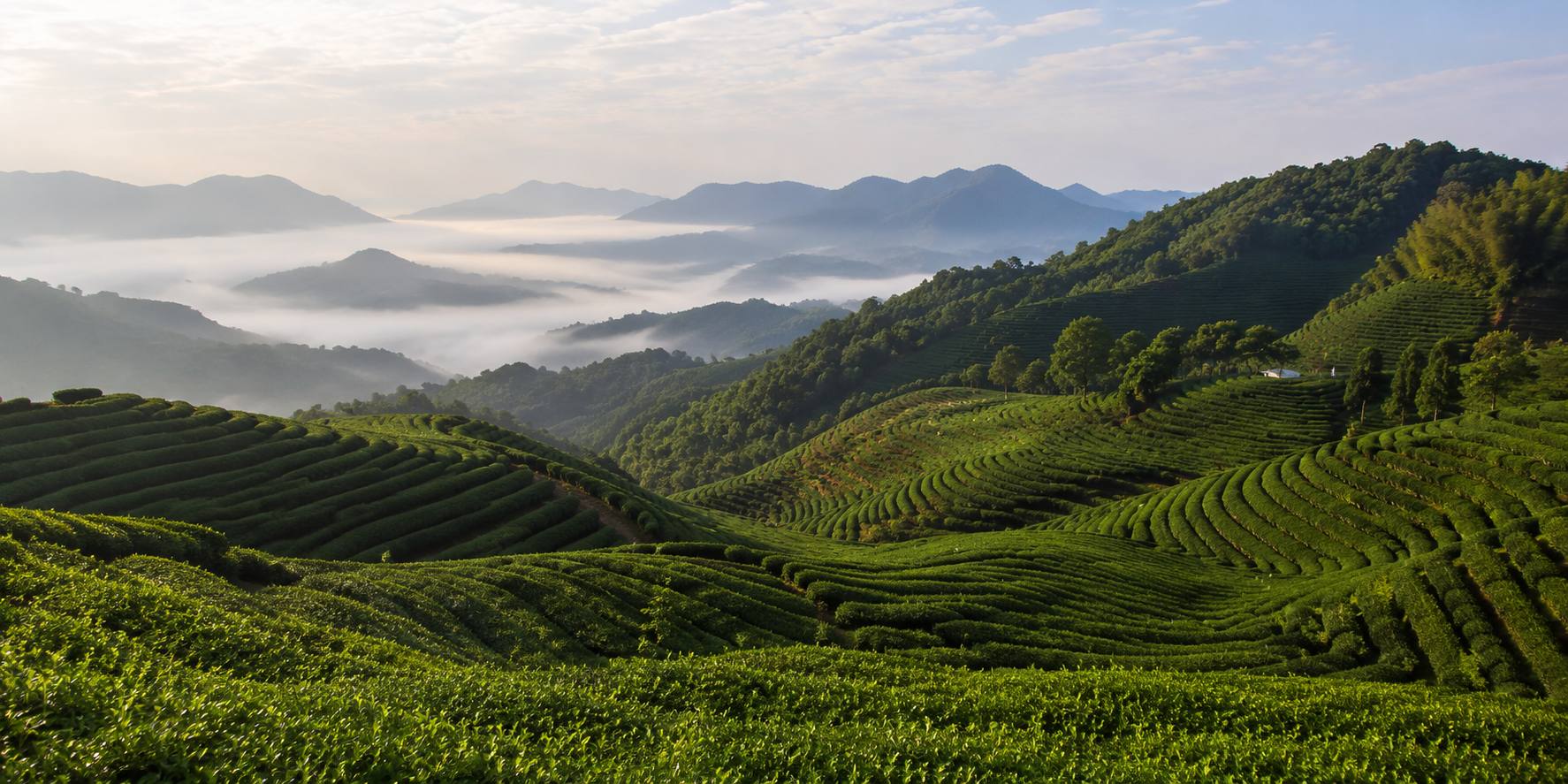
The rest comes from the garden. Altitude is the most visible factor: a wide swing between day and night temperature makes the bush grow slowly, and the leaf comes out thicker, holds more, and bites less. The same cultivar grown on the plain and grown at a thousand metres gives two different teas.
But altitude is not the whole story. Anxi Tie Guan Yin, Wuyi rock tea and Oriental Beauty are all fine teas and none of them is grown high — for those, the soil and the maker's hands decide more than the metres do.
The season reads in the cup too: spring tea is the most fragrant and the softest, winter tea dense with a sweet finish, and summer tea is usually the cheapest thing the same garden produces.
How to choose
- Start from the oxidation, not the name. The name tells you less than you think; a yellow-green liquor and an orange-red one are two different drinks.
- Look at the roll. Tight, even pellets with short stems mean careful work. A lot of broken leaf means the liquor comes fast and turns astringent easily.
- Smell the dry leaf, then the wet. The dry leaf's scent may be a flavouring; the brewed leaf's cannot hide.
- Buy a little first. A 100 g packet is enough to tell whether a tea suits you. If it does, then buy 250 g.
In the shop
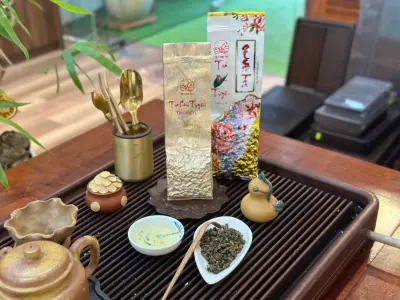
Once the oxidation range makes sense, the names of the teas finally mean something: Tie Guan Yin, Jin Xuan, Si Ji Chun, aged oolong, Oriental Beauty — each name is a place on that scale. There is a separate article on the oolongs on the shelf.